
ecoDestinations - Brazil

ecoDestinations - Brazil

Acknowledgment: The preparation of this page would not have been possible without the support, hard work and efforts by our friend Ariane Janer of EcoBrasil, who has graciously provided detailed information on the destination and travel experiences in Brasil.


Brazil
Lalbicollis (Photo: EcoBrasil)

Featured Destination - Brasil

Which Brazil do you want to visit?

The classic destinations like Rio de Janeiro, Salvador, Manaus and Foz de Iguaçu? Or do you like the sound of places like Abrolhos, Bonito, Cabaceiras, Chapada Diamantina, Delta de Parnaiba, Guaraqueçaba, Jalapão, Mamirauá, Pirenopolis, Rio de Contas, Serra do Cipó, Serra de Capivara, Urubici and Vale do Guaporé. These are just a few of hundreds of destinations in a country that is too big to see on one trip.


Looking for World Heritage Sites? Brazil has 10 cultural and 7 natural sites.

Interested in National Parks? Brazil's list is rapidly increasing and reached 65 in 2008.
Drawn by history and culture? Take your pick from 50+ heritage cities and 10,000+ archeological sites.
Love to celebrate? Feel the Congado, join a Copacabana Reveillon, and dance till you drop at Carnaval.
Life is a beach? More than 2,000 to choose from - and that is not counting the river beaches!


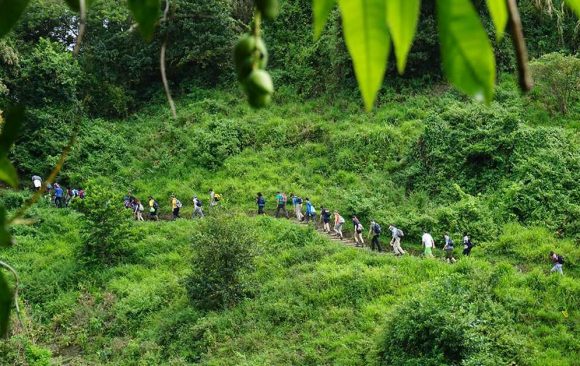
Or is it about the experience? Perhaps an insiders look at what makes a big city tick, how to help local communities, learning about opposing angles in the Amazon debate, surf new waves and dive new shipwrecks, tick off new species for your birding life list, explore the Estrada Real on foot, bike or horseback, find the perfect place to relax and renew, go after views that take your breath away, discover a cuisine that goes from earthy good to a delicious fusion, dance to the sound of different drums … Brazil, so many destinations, so many possibilities.


Natural Brazil
Atlantic Rainforest (cloud forest)
(Photo: Bengt Janér)

Natural Brasil: Breakdown of Brasil’s 5 Major Biomes

From the Amazon, the largest rainforest in the world, to Pantanal, the largest wetlands in the world.


  • THE AMAZON - The Largest Rainforest in the World: The mythical Amazon can only be described in superlatives. It covers an area of 5 million square kilometers of which 80% is on Brazilian territory. It is the largest and most intact rainforest region in the world
  • PANTANAL - The largest wetlands in the world: In the centre of the South American continent lies the largest wetlands in the world: the Pantanal. Extending into three countries, Brazil, Bolivia and Paraguay, its total area is an estimated 240,000 square kilometers (60% is in Brazil).
  • THE ATLANTIC FOREST - The Forgotten Rainforest of Brazil: The Atlantic Forest is one of the most threatened rainforests in the world. It used to stretch all along the Brazilian coast occupying an area of about 1.1 million square kilometers. Now less than 10% remains. Most of the forest cover in the states North of Salvador is gone.
  • CERRADO - The Magical Brazilian Heartland: The heartland of Brazil, the "cerrado", covers an area equal to Western Europe (2 million sq km) and is thought to be one of the South American continent’s more ancient ecosystems.
  • CAATINGA - Ancient Badlands of Northeastern Brazil: Caa-tinga (caa = woods, tinga = white) is the Tupi Indian name for the typical vegetation of the backlands of the North East of Brazil. In the prolonged dry season, most of the thorny bushes, scrubs and contorted trees of the caatinga lose their leaves and you see a thicket of dull grey-white trunks and twigs.


Community Tourism
Canoe Tour (Photo: Bruno Maia)

Community Tourism in Brazil: Southern Hospitality at its Finest

As anyone who has visited Brazil can attest, Brazilians are fun loving and very welcoming. You will encounter this warm hospitality everywhere you go, whether it is in a small remote community or the big city.


Visitors to Brazil usually list the stunning nature of Brazil as the number one attraction, but the friendly nature of Brazilians themselves comes a close second. As anyone who has visited Brazil can attest, Brazilians are fun loving and very welcoming. You will encounter this warm hospitality everywhere you go, whether it is in a small remote community or the big city. There is even scientific evidence for the "simpatico" mentality of the Brazilians: a study called "Kindness of Strangers" by Robert Levine (CSU-Fresno) published in American Scientist (2003), showed that Rio de Janeiro was the friendliest of 23 large cities in the world.


No wonder then, that there are plenty of community tourism possibilities in Brazil.


One of the first community tours in Brazil was organized to the favelas of Rio de Janeiro in 1992. Favelas were then seen by many as "mad, bad and dangerous to go." Marcelo Armstrong's Favela Tour showed that the reality of favelas is complex and, though in many of them crime lords rule, most people who live in them are hardworking. His small group interactive tours support social projects in the community, help the community show their side of the story and give travelers a chance to learn. Attitudes have slowly changed over the years, due to both social and infrastructure improvements and the discovery of the creative and cool in favela culture. Of course, a delicate balance must be kept between an interesting interactive visit or stay and plain slum-gazing.


WWF Brazil realized the importance of involving the local community in conservation projects and in 1996 set up the Community-based Ecotourism Program, which worked with WWF supported projects like the Golden Lion Tamarin (Atlantic Rainforest near Rio), TAMAR Sea Turtle Conservation (Fernando de Noronha), Chapada dos Veadeiros Cerrado region (2 hours north of Brasilia) and several local communities in the Amazon (states of Rondonia and Amazonas). The program joined conservation specialists, community leaders and ecotourism specialists.


Ecotourism


Ecotourism & Sustainable Tourism Certification in Brazil

Local and national efforts to create quality standards for ecotourism and sustainable tourism products in Brazil. There have been ongoing efforts to create some kind of certification or code of conduct. Early efforts were made by Roteiros de Charme and Brazilian Hotel Association, with a focus on environmental impacts.


In 2002, a more ambitious program backed by the newly-created Ministry of Tourism started up: Brazil Sustainable Tourism Program (PCTS), coordinated by the Instituto de Hospitalidade and sponsored by IADB, Ministry of Tourism, Small Business Support Service (SEBRAE) and the Brazil Export Promotion Agency (APEX). The objective of the program was improving competitiveness of Brazilian tourism, through better quality and sustainability.


The PCTS' initiatives include: creation of National Standard which meets the Global Sustainable Tourism Criteria, and sustainability trainings for small accommodations and auditors. In March 2009, Instituto Falcão Bauer become the first certification agency to be accredited by Inmetro. Recently, the NGO Reserva da Biosfera da Mata Atlantica started up a destination program for the region around the colonial town of Paraty, using the PCTS methodology, which they participated in another destination.


Brazil is also a pioneer in Adventure Tourism Certification. The Aventura Segura (Safe Adventure) is coordinated by ABETA (Brazilian Adventure Tourism Trade Organization) with strong support from the Ministry of Tourism and SEBRAE. The focus of this program is responsible and safe adventure tourism operations and the first results show that structured action can transform destinations. The foundation of the program is the development of a structured group of adventure tourism standards. The Program will continue into 2009 and new companies are expected to join up. ABETA also hopes to see the first companies getting certified.


Blue Flag, the beach certification organization, is also represented in Brazil and has started a pilot program involving 7 beaches. This year they are expected to ask for certification. Though there are not yet any certified companies in either sustainable tourism or adventure tourism, Brazil has really advanced in the past 20 years. Brazilian tourism products like the Cristalino Jungle Lodge (Southern Amazon), Uakari Floating Lodge at Mamirauá (Amazon Basin), Pousada Caiman (Pantanal), Projeto Bagagem (community tourism operator) and Prainha do Canto Verde (Northeast Brazil) have won prizes or been finalists in major sustainable tourism awards.


Latest News and Articles on Brazil

By Adriana Braun   *This article was originally written by Adriana in Portuguese, and has been edited and translated by Julio Bin, O VIAJENTE ESPECIAL project partner.   What a great experience it was, returning to Fernando de Noronha – after ten years – and finding that previous obstacles for us wheelchair users no longer existed! When I first visited here ten years ago, I almost went crazy looking for a hotel that would accommodate me. It was beyond difficult just trying to put luggage in a buggy, dealing with a rude taxi driver who did not hide his...
By Adriana Braun and Julio Bin   Ecotourism for people in wheelchairs? You may wonder what that looks like, how it’s done. You’d be pleasantly surprised to learn that in many destinations there are efforts in place to improve tourism infrastructure to better serve people with disabilities. Brazil is one such example. Accessible Tourism Travel and Tourism is recognized as the largest service sector industry, and as such it is imperative that people of all ages and abilities are allowed access to its activities. Accessible Tourism is a movement that has evolved to...
By Mikael Castro   "Welcome to the Capital of Ecotourism" read the sign at the entrance of town Bonito, in Brazil's state of Mato Grosso do Sul. A rather ambitions statement, I thought, confident I would find only a few great ecotourism establishments among a pool of green-washed want-to-be’s. I was pleasantly surprised, however, to find an amazingly organized, conservation-driven, municipal-wide, policy-driven, multi-stakeholder system for ecotourism.   The key to Bonito's success in ecotourism lies on a delicate balance between tourism...
By Mikael Castro "Welcome to the Capital of Ecotourism" "Welcome to the Capital of Ecotourism" read the sign at the entrance of town Bonito, in Brazil's state of Mato Grosso do Sul. A rather ambitions statement, I thought, confident I would find only a few great ecotourism establishments among a pool of green-washed want-to-be’s. I was pleasantly surprised, however, to find an amazingly organized, conservation-driven, municipal-wide, policy-driven, multi-stakeholder system for ecotourism.   "So what makes ecotourism in Bonito so special,...
Roteiros de Charme Hotel Association was founded in Rio de Janeiro by five independent hoteliers in 1992, immediately following UNCED, as a private non-profit organization. Recognising the pressure imposed by the growing tourism industry on the maintenance and integrity of ecosystems and biological diversity, its mission is to support actions that encourage environmental conservation where they operate, aiming at promoting the sustainable development of tourism in Brazil.   Roteiros de Charme has reaffirmed its commitment to the environment through the development and adoption...
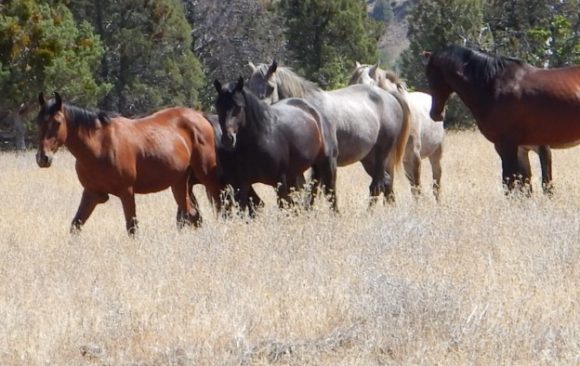
By Ariane Janér, Co-founder, EcoBrasil   When travelling through Brazil, you see horses everywhere. According to the Brazilian Geography and Statistics Institute's 2007 data, there are nearly 6 million horses in the country, which means Brazil has the fourth largest herd in the world.   Many of these horses are of mixed origin and often used in cattle-ranching. But Brazilians also breed and enjoy riding quality horses in disciplines that range from classical dressage to horseback archery. Apart from popular imported breeds such as Quarterhorses and Arabs,...
By Ariane Janer, co-founder, EcoBrasil Fauna and Flora of Brazil The present day mammal fauna of Brazil is a mixture of the descendants of ancient inhabitants of Gondwanaland and newcomers that descended from North America with the closing of the Panama land bridge about 3 million years ago. The first group includes anteaters, sloths and armadillo’s and marsupials. Some animals managed to reach South America after it was isolated, but before the sea became an unsurpassable barrier. These include the new world primates and the caviomorph rodents. But many of South America...
By Ariane Janer, co-founder, EcoBrasil THE AMAZON -The Largest Rainforest in the World The mythical Amazon can only be described in superlatives. It covers an area of 5 million square kilometers of which 80% is on Brazilian territory. It is the largest and most intact rainforest region in the world. Through it flows an extensive drainage system of more than a thousand rivers and in the skies over the rainforest, you have the flying rivers that flow in the opposite direction from the ocean to the Andes. It is estimated that water is recycled as vapour and rain 5 times on this journey...
By Ariane Janer, co-founder, EcoBrasil   Visitors to Brazil usually list the stunning nature of Brazil as the number one attraction, but the friendly nature of Brazilians themselves comes a close second. As anyone who has visited Brazil can attest, Brazilians are fun loving and very welcoming. You will encounter this warm hospitality everywhere you go, whether it is in a small remote community or the big city. Visiting Brazil: The Essentials Climate The climate varies according to latitude and altitude. The seasons are exactly the opposite of those in Europe and the United...

About TIES


As the world's oldest and largest international ecotourism association, TIES seeks to be the global source of knowledge and advocacy uniting communities, conservation, and sustainable travel.


> The International Ecotourism Society

ESTC12


The Ecotourism and Sustainable Tourism Conference will highlight global challenges and local opportunities, supporting sustainable development of tourism and promoting solutions that balance conservation, communities and sustainable travel.

Connect to Us   


Become a Fan of TIES  Follow TIES on Twitter  Share Your Pictures with TIES  Share Your Videos with TIES


Featured Partners & Supporters


Visit California  Monterey County   Hilton Head Island, South Carolina